
NorthStar Capital AdvisorsNorthStar Capital AdvisorsNorthStar Capital AdvisorsNorthStar Capital Advisors
Start Here
  • How We Help
  • Who We Serve
  • Who We Are
  • Fiduciary
  • Podcast
  • Start Here
  • How We Help
  • Who We Serve
  • Who We Are
  • Fiduciary
  • Podcast
  • Start Here

Equifax Data Breach: What You Need To Know

  • September 14, 2017/
  • Posted By : admin/
  • 0 comments /
  • Under : Personal Finance, Scams & Schemes, Seeking Prudent Advice

Late last week Equifax announced it was hacked and personal information for 143 million Americans was stolen. If you use credit of any kind (credit cards, home mortgages, student loans, etc.) as most people do, there’s a 50% chance your personal information is involved. Here’s a run down on what happened, the risks, and the options you should consider to mitigate the impact to your personal finances.

Who is Equifax?
Equifax is one of the big three credit reporting agencies in the United States. It collects large amounts of personal information about anyone who has received credit through credit cards, mortgages, car loans, and student loans. Companies use credit reports from Equifax (plus TransUnion and Experian) to extend credit to consumers and conduct background checks for employment and housing.

What happened?
Hackers broke into Equifax’s database and stole personal information for 143 million people. The breach lasted from mid-May through July 2017. Equifax revealed the data breach publicly on September 7, 2017. Stolen information includes people’s names, Social Security numbers, birth dates, addresses and, in some cases, driver’s license numbers. Hackers also accessed credit card numbers for some 209,000 people and dispute resolution communications for about 182,000 people.

How could you be at risk?
Hackers have or will very likely sell this personal information to criminals who can then perpetrate identity theft. With that information, they can open bank accounts, new credit cards, or even drivers’ licenses in your name. Criminals could also file fraudulent claims for your tax refund or your Social Security benefits.

What steps should you consider?
Remember there’s a good chance that you’ve been exposed. To mitigate the potential damage, the Federal Trade Commission recommends you take immediate steps to protect your information from being misused:

  • Visit Equifax’s website, www.equifaxsecurity2017.com
  • Find out if your information was exposed. Click on the “Potential Impact” tab and enter your last name and the last six digits of your Social Security number. Your Social Security number is sensitive information, so make sure you’re on a secure computer and an encrypted network connection any time you enter it. The site will tell you if you’ve been affected by this breach.
  • Whether or not your information was exposed, U.S. consumers can get a year of free credit monitoring and other services. The site will give you a date when you can come back to enroll. Write down the date and come back to the site and click “Enroll” on that date. You have until November 21, 2017 to enroll.
  • You also can access frequently asked questions at the site.

Here are some other steps to take to help protect yourself after a data breach:

  • Check your credit reports from Equifax, Experian, and TransUnion — for free — by visiting annualcreditreport.com. Accounts or activity that you don’t recognize could indicate identity theft. Visit IdentityTheft.gov to find out what to do.
  • Consider placing a credit freeze on your files. A credit freeze makes it harder for someone to open a new account in your name. Keep in mind that a credit freeze won’t prevent a thief from making charges to your existing accounts.
  • Monitor your existing credit card and bank accounts closely for charges you don’t recognize.
  • If you decide against a credit freeze, consider placing a fraud alert on your files.A fraud alert warns creditors that you may be an identity theft victim and that they should verify that anyone seeking credit in your name really is you.
  • File your taxes early — as soon as you have the tax information you need, before a scammer can. Tax identity theft happens when someone uses your Social Security number to get a tax refund or a job. Respond right away to letters from the IRS.

Our CEO Chris Mullis visited Equifax’s website to determine if his family’s information was exposed. His information is not involved, but unfortunately his wife is not so lucky. Equifax immediately allowed Chris’ wife to enroll in its TrustedID Premier monitoring program. Their personal experience just underscores the fact that basically one of every two Americans is likely impacted by the Equifax data breach.

Please take steps to protect yourself from this data breach and share this alert with family and friends.

If you have any questions or need any help, please give us a call.


Student Debt Linked to Worse Health and Less Wealth

  • September 7, 2017/
  • Posted By : admin/
  • 0 comments /
  • Under : Personal Finance, Seeking Prudent Advice

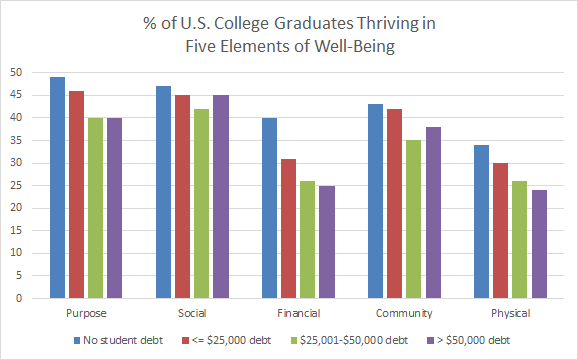
student-debtThe negative effects of student debt are significant and persistent according to a Gallop poll.  Those who borrowed more than $25,000 are less likely to enjoy work and are less financially and physically fit than their debt-free peers even 24 years after graduation.

Gallop examined five elements of well-being:

  • Purpose: liking what you do each day and being motivated to achieve your goals
  • Social: having supportive relationships and love in your life
  • Financial: managing your economic life to reduce stress and increase security
  • Community: liking where you live, feeling safe, and having pride in your community
  • Physical: having good health and enough energy to get things done daily

Financial and physical well-being show the strongest relationship with student debt.  Conversely, social well-being appears to have the weakest debt link.

“These results offer a new dimension of how college debt affects the rest of your life and it gives us more cause for concern,” said Brandon Busteed, executive director of Gallup Education.

Source: Gallup


Start Early to Raise Money-Savvy Kids

  • August 31, 2017/
  • Posted By : admin/
  • 0 comments /
  • Under : Saving Money

girlmoneyThree out of four American teens can’t decipher a pay stub. The financial literacy of American 15-year-olds is marginally average in an international, widely-cited assessment.

Since only 17 states require a high-school personal-finance class, the burden of teaching our kids about money falls on us parents.

A comprehensive review of the academic literature shows that basic financial habits are generally set by age 7.  Children as young as 3 can comprehend basic financial concepts like value, exchange, and choice.

Some parents are terrified by the notion of teaching their kids about money because they feel their own knowledge of the subject is thin.  But you don’t need to be a Certified Financial Planner to show your kids the advantage of saving a dime out of every dollar, comparing prices, and avoiding high-interest credit card debt.

MoneyAsYouGrow.Org
The website MoneyAsYouGrow.org is a fantastic resource that pulls together the best research and educational materials available into a manageable list of 20 financial rules of thumb.  These pearls of wisdom are organized by age and include activities to bolster the learning process.

So if you’re a parent or grandparent, seize the opportunity to shape your child’s future by nurturing their financial savvy.

The first step is to start talking to your kids about money.  So grab your talking points from MoneyAsYouGrow.org and get to it!


Source: WSJ


What Kind of Investor Are You?

  • August 24, 2017/
  • Posted By : admin/
  • 0 comments /
  • Under : Behavior, Seeking Prudent Advice

question-mark

What kind of investor are you?  According to author William Bernstein, there are three broad groups of investors segregated by behavior:

Group 1: The average small investor, who does not have a coherent asset-allocation strategy and who owns a chaotic mix of mutual funds and/or individual securities, often recommended to him or her by a broker or advisor. He or she tends to buy near bull market peaks and sell near bear market troughs.

Group 2: The more sophisticated investor, who does have a reasonable-seeming asset-allocation strategy and who will buy when prices fall a bit (“buying the dips”), but who falls victim to the aircraft simulator/actual crash paradigm, loses his or her nerve, and bails when real trouble roils the markets. You may not think you belong in this group, but unless you’ve tested yourself and passed during the 2008–2009 bear market, you really can’t tell.

Group 3: Those who do have a coherent strategy and can stick to it. Three things separate this group from Group 2: first, a realistic appraisal of their true, under-fire risk tolerance; second, an allocation to risky assets low enough, or a savings rate high enough, to allow them to financially and emotionally weather a severe downturn; and third, an appreciation of market history, particularly the carnage inflicted by the 1929–1932 bear market. In other words, this elite group possesses not only patience, cash, and courage, but also the historical knowledge informing them that at several points in their investing career, all three will prove necessary. Finally, they have the foresight to plan for those eventualities.

“Job one for the investor, then, is to learn as best she can, to ignore the day-to-day and year-to-year speculative return in order to earn the fundamental return.” – William Bernstein

Source: Rational Expectations: Asset Allocation for Investing Adults


Skin in the Game?

  • August 17, 2017/
  • Posted By : admin/
  • 0 comments /
  • Under : Best Practices, Personal Finance, Seeking Prudent Advice

skin
Would you eat at a restaurant where the chefs didn’t eat their own cooking? Would you have joined the Hair Club if the president weren’t also a client? Then why would you invest according to an advisor’s guidance if that advisor doesn’t follow his or her own advice?

Portfolio manager Mebane Faber suggests,

Next time you sit down with your advisor, ask him or her a simple question:

How do you invest your own money?

Don’t settle for a simple “well, uh, I have some stocks and bonds, and, umm, some CDs”…ask them specifically what their allocation percentages are, and what funds they use etc.  Many find it very uncomfortable to disclose and many will refuse to do so!

As far as fund managers, many managers don’t even invest in their own funds.  (Here are a few articles on how little managers invest in their own funds here, here, and here.)

In addition, many commentators are willing to provide you with plenty of advice but just try getting them to disclose how they invest their own money – impossible!  How many commentators can you identify that invest in their own funds and are transparent with where they invest? They are happy to give you advice, but forbid they tell you how they invest!

We Eat Our Own Cooking!
The principals of NorthStar Capital Advisors place nearly all of their investable wealth in the same type of diversified stock and bond portfolios that we manage on behalf of our clients.  We also inform and educate our clients on how we are cooking via this personal finance blog, quarterly performance reports, and around the clock access via phone and email.

So, next time you are talking with your advisor or broker, or hear someone giving lots of financial advice, ask them one simple question: “What do you do with your money?”

Money Lessons for Professional Athletes

  • August 9, 2017/
  • Posted By : admin/
  • 0 comments /
  • Under : Seeking Prudent Advice

athletes“Many NFL, NBA and Major League Baseball players have a penchant for losing most or all of their money. It doesn’t matter how much they make. And the ways they blow it are strikingly similar.”
— Sports Illustrated

Barry Ritholtz gives a good run down on how professional athletes go broke:

Youth and inexperience: Most professionals see their salary gradually increase over the course of their career. By the time they are making the big bucks, age and experience has taught them (more or less) how to manage their finances.

Not so for the pro athlete. After being an unpaid student athlete in college, they suddenly have access to millions of dollars. I don’t know about you, but I am fairly certain that if someone gave me $2 million when I was 21, I would have died in a fiery Ferrari wreck or some other foolish thing. It is a simple formula: Youth plus inexperience with money equals bad outcomes.

Athletes have short careers: Injuries, trades and the sheer quality of competitive talent means a twenty-year sports career is the exception, not the rule. On the other hand, white-collar professionals enjoy careers that last 30, 40, even 50 years — more time to amass their wealth, as well as a much longer period to figure out how to manage it.

Young athletes spend too much money: Suffice it to say they spend lots and lots of money, often more than they actually have. Divorce, child support and the costs of an entourage all eat into the cash flow.

Dazzled by the lifestyles of veterans — whose longevity and endorsement deals put them way ahead of the average player in terms of income — these professional competitors may feel pressure to compete off the field. Trying to keep up is a recipe for disaster.

Everyone takes home much less than they realize: Holding aside the issue of unwise spending, let’s look at nondiscretionary spending. GQ analyzed the finances of the typical athlete making $5 million a year. Right off the top, Uncle Sam and the resident state where he plays takes a hefty share — about half for someone in that top tax bracket. Then you have the professional managers, lawyers, accountants, etc. The agent takes $250,000, while the manager may take up to twice that amount. Trainers, nutritionists, travel and courtesy tickets all eat into the net.

Before spending the first discretionary dollar, the typical $5 million player is already down about 70 percent of the gross, to $1.5 million. That sounds like a lot of money, but a naive kid who has a $5 million dollar budget in his head can quickly find himself way behind.

Barry’s five simple steps that athletes (and non-athletes!) can take to avoid financial crisis:

1 Be involved: It is important that a young investor becomes involved with financial planning from the beginning of a career. He should understand what his take-home pay is (after taxes and fees) — and know what he is spending money on.

Be aware of the other numbers involved: What your career expectancy is. How much you are likely to make. What it is going to cost to live a certain lifestyle.

2 Have a plan: A young athlete should plan for three phases of a career: rookie years, top earning years and the life after sports.

In the first part of a career, the emphasis should be on improving your game, and saving money. Don’t worry about indulging in luxuries; you have the rest of your life to do that. Once you enter your prime earning years, you can loosen up a touch and spend more — but always within your means.

The last part of athletes’ careers is often the longest: when they are no longer playing professional ball. Having enough saved to carry them for the next 40 years is important. So, too, is having a second career — whether as an entrepreneur or a color commentator on TV sports broadcasts or as a coach.

Mapping out a workable plan for these three phases is crucial to avoiding that “other” phase: Bankruptcy.

3 Keep your costs low early in your career: Investors learn that costs, taxes and excessive fees are a killer of portfolios over the long term. So, too, are all of the small costs that eat into a professional athlete’s financial pie.

It helps to find a more seasoned and experienced teammate to walk you through what you should and should not be paying for.

4 Avoid debt and leverage: Learning to live within your means is a crucial financial skill for anyone. It is especially valuable for someone earning big bucks for what is likely a few short seasons. Debt simply means you are living beyond your means, even at those big salaries.

The latest snare waiting to trip up the unwary and impatient young athlete is the payday loan. For a very large fee, professional athletes can get huge advances on their salaries. These loans can be usurious, with fees and interest adding up to annual rates of 25 percent or higher. These are to be avoided at all costs.

5 Keep your investments simple: What most people think is the hardest aspect of finance is in reality the simplest: Avoid complex (private placements) or expensive (hedge funds or private equity) investments. Don’t make loans to friends or family. Don’t back start-ups. Don’t invest in new technology. Never buy fancy financial “products.” And whatever you do, for God’s sake, don’t put money into a restaurant.

Instead, have a simple asset allocation model of broad indices (U.S. equities, emerging market stocks, corporate bonds and Treasuries). You are in your early 20s, so you should have a 40- to 50-year time horizon for these investments. Don’t waste your time stock-picking or timing, just let the markets work for you. Build a portfolio of high quality, tax-free municipal bonds (especially if you live in a high tax state). These will pay you an income as long as you hold them.

Source:
Barry Ritholtz / WP


Inherited IRAs

  • August 3, 2017/
  • Posted By : admin/
  • 0 comments /
  • Under : Best Practices, Retirement

inherited-iraInheritances received via an IRA can be advantageous since you can choose to stretch the required distributions across your life expectancy, giving the assets more time to grow (plus taxes aren’t due until withdrawals are made). Here are key best practices to keep in mind:

  • When you inherit an IRA from anyone other than your spouse, you can’t roll it over into your own IRA
  • Instead, you have to retitle the IRA so it is clear the owner died and you are the beneficiary
  • If you move the account to a new custodian, make sure it is a “trustee to trustee” transfer”
  • If the check is mistakenly made out to you, the IRS will consider it a “total distribution” subject to tax and if you are anyone other than the surviving spouse, it would effectively end the IRA
  • Be aware there are deadlines for all of these actions
  • If the IRA owner dies after age 70 1/2 (when required withdrawals start) and didn’t yet take a withdrawal for the year, the heir has to do so by December 31
    (if you miss the deadline, you are subject to a 50% penalty on the amount you should have withdrawn!)
  • If you are a nonspouse beneficiary, determine the required distribution by looking up your life expectancy on the single-life table in IRS publication 590
    (most IRA custodians will calculate the required withdrawal amount for you but you need to make sure they are using the inherited IRA calculation)
  • Once you receive a 1099 form, confirm that the custodian properly indicated the distribution as a code “4”

Know More, Make More

  • July 27, 2017/
  • Posted By : admin/
  • 0 comments /
  • Under : Best Practices, Performance, Personal Finance, Retirement, Seeking Prudent Advice

knowledge-powerA ground-breaking academic study finds that more financially knowledgeable people earn a higher return on their 401(k) retirement savings.

Dr Robert Clark (NC State University), Dr. Annamaria Lusardi (George Washington University), and Dr.  Olivia Mitchell (University of Pennsylvania) analyzed a unique dataset that combined 401(k) performance data for 20,000 employees plus financial literacy data for the same workers.

Investors deemed to be more financially knowledgeable than peers enjoyed an estimated 1.3% higher annual return in their 401(k)s or other defined contribution plans than those with less knowledge.

According to the study’s authors:
“We show that more financially knowledgeable employees are also significantly more likely to hold stocks in their 401(k) plan portfolios. They can also anticipate significantly higher expected excess returns, which over a 30-year working career could build a retirement fund 25% larger than that of their less-knowledgeable peers.”

Financially savvy people tend to save more and are more likely to invest those savings in the stock market. But past studies haven’t clearly demonstrated that these people necessarily make better investment decisions. The authors look at patterns in 401(k) retirement accounts and find that more sophisticated investors do indeed get better returns on their savings.

Source: “Financial Knowledge and 401(k) Investment Performance”


Rebalancing is Important

  • July 21, 2017/
  • Posted By : admin/
  • 0 comments /
  • Under : Best Practices

balanceAn investment portfolio must be periodically rebalanced back to its original targets to maintain the intended risk level and asset allocations (i.e., mix of stocks and bonds).

Drifting Through Time
Say you started out with a portfolio of 50% stocks and 50% bonds at age 21. Stocks go up 2 out of 3 years on average. By the time you’re 50 your portfolio mix could drift to 90% stocks and 10% bonds. That’s quite out of balance!

In rebalancing, we would sell the “excess” of stocks and use the proceeds to purchase bonds. In doing so, we ensure that we sell investments at a relatively high prices and buy investments at a low price.

Effects of Rebalancing
In a balanced portfolio of stocks and bonds, you will typically be selling stocks and buying bonds when you rebalance. You will be removing excess volatility from the outsized stock allocation and going back to your initial combination of stocks and bonds.

Quarterly or Annually — Which is better?
In a taxable account, there is a tax benefit for waiting more than a year to rebalance. In a non-taxable account, quarterly rebalancing can have some advantages. You probably don’t want to rebalance on shorter time periods because you need to give your strong-performing investments time to run and avoid the potential costs of excess transactions.

Easy Rebalancing
Is it possible to set up automatic rebalancing? One way is to work with a professional money manager like NorthStar. We do this for our clients. Big firms like Vanguard usually don’t have an automatic option, but they say they will spend 15 to 30 minutes on the phone with customers to help walk through the process and get rebalanced.


Great Expectations

  • July 14, 2017/
  • Posted By : admin/
  • 0 comments /
  • Under : Behavior, Investing 101, Performance, Seeking Prudent Advice

Expectations are very important. If you know what to expect, you shouldn’t be surprised. And if you’re not surprised, you won’t panic.

Coaching clients on what to expect and how (not) to respond to extraneous events is our defining role as a trusted advisor. 

We invest in stocks because of their superior returns. Those historically higher returns are a reward for tolerating volatility (i.e., the “volatility premium”).  But what does stock volatility look like in the real world? What pattern of price variability should we expect?

Well, here it is in its most elegant of graphical forms (click image for a bigger view).

Here’s how to read this chart:

  • The intra-year decline versus the annual return of the S&P 500 are plotted vertically with years running horizontally from 1980 through year-to-date 2017.
  • The annual return (grey bars) show the calendar year price increase. For example, in 1980 stocks climbed 26% for the year.
  • The intra-year decline (red dots) is the largest market drop from peak to trough during that year.  For example, in 1980 we experienced a 17% drawdown.
  • Putting these together, in 1980 the stock market dipped 17% before closing up 26% by the end of the year.

It’s not hard to see that short, intra-year declines are the norm.

In fact, the average intra-year drop is 14.1%. But despite these temporary declines, the annual returns are positive in 28 of 37 years (76% of the time). During the charted time period 1980 to 2016 the average annual return was 8.5% This pattern is persistent.  If you look back to 1946, the average drawdown is a remarkably close 13.8%, and the price return was positive 50 of the 71 years (70% of the time).

History shows the declines are temporary, the advance is permanent.

Think about how the average person responds to these intra-year declines. The financial media is screaming about the crisis du jour which is consistently characterized as the end of the world (“I’ve lived through some terrible things in my life, some of which have actually happened.” — Mark Twain ).  Data shows the average investor, without the support of a caring, empathetic coach/advisor, consistently sells at the worst of times – i.e., during one of these perfectly normal and temporary pullbacks.

Volatility does not equal a financial loss unless you sell.

In our humble opinion, possessing an informed expectation, one that allows you to ignore short-term gyrations to capture long-term gains, is a Great Expectation.


« First‹ Prev18192021222324Next ›Last »
Recent Posts
  • GRB 250314A
    Hidden Insurance Gaps That Threaten Your Wealth December 11,2025
  • S106
    Your Parents’ Money: A Guide to Financial Caregiving November 27,2025
  • SNR 0509-67.5
    80% Rule for Retirement Income: Myth or Reality? November 13,2025
  • Tarantula Nebula
    Tax Moves to Make Before 2026 October 30,2025
  • Bull's Eye Galaxy
    Unexpected Risks That Could Derail Your Retirement October 16,2025
Archives
  • December 2025
  • November 2025
  • October 2025
  • September 2025
  • August 2025
  • July 2025
  • June 2025
  • May 2025
  • April 2025
  • March 2025
  • February 2025
  • January 2025
  • December 2024
  • November 2024
  • October 2024
  • September 2024
  • August 2024
  • July 2024
  • June 2024
  • May 2024
  • April 2024
  • March 2024
  • February 2024
  • January 2024
  • December 2023
  • November 2023
  • October 2023
  • September 2023
  • August 2023
  • June 2023
  • May 2023
  • April 2023
  • March 2023
  • February 2023
  • January 2023
  • November 2022
  • October 2022
  • September 2022
  • August 2022
  • July 2022
  • May 2022
  • April 2022
  • March 2022
  • February 2022
  • December 2021
  • October 2021
  • September 2021
  • August 2021
  • July 2021
  • June 2021
  • May 2021
  • April 2021
  • March 2021
  • February 2021
  • January 2021
  • December 2020
  • November 2020
  • October 2020
  • September 2020
  • August 2020
  • July 2020
  • June 2020
  • May 2020
  • April 2020
  • March 2020
  • November 2019
  • October 2019
  • June 2019
  • May 2019
  • April 2019
  • March 2019
  • February 2019
  • January 2019
  • December 2018
  • November 2018
  • October 2018
  • September 2018
  • August 2018
  • July 2018
  • June 2018
  • May 2018
  • April 2018
  • March 2018
  • February 2018
  • January 2018
  • December 2017
  • November 2017
  • October 2017
  • September 2017
  • August 2017
  • July 2017
  • June 2017
  • May 2017
  • April 2017
  • March 2017
  • February 2017
  • January 2017
  • December 2016
  • November 2016
  • October 2016
  • September 2016
  • August 2016
  • July 2016
  • June 2016
  • May 2016
  • April 2016
  • March 2016
  • February 2016
  • January 2016
  • December 2015
  • November 2015
  • October 2015
  • September 2015
  • August 2015
  • July 2015
  • June 2015
  • May 2015
  • April 2015
  • March 2015
  • February 2015
  • January 2015
  • December 2014
  • November 2014
  • October 2014
  • September 2014
  • August 2014
  • July 2014
  • June 2014
  • May 2014
  • April 2014
  • March 2014
  • February 2014
  • January 2014
  • December 2013
  • November 2013
  • October 2013
  • September 2013
  • August 2013
  • July 2013
  • June 2013
  • May 2013
  • April 2013
  • March 2013
  • February 2013
  • January 2013
  • December 2012
  • November 2012
  • October 2012
  • September 2012
  • August 2012
  • July 2012
  • June 2012
  • May 2012
  • April 2012
  • March 2012
  • February 2012
  • January 2012
  • December 2011
  • November 2011
  • October 2011
  • September 2011
  • August 2011
  • July 2011
  • June 2011
  • May 2011
  • April 2011
  • March 2011
  • February 2011
  • January 2011
  • November 2010
  • October 2010
  • September 2010
  • August 2010
Categories
  • 401(k)
  • Annuities
  • Behavior
  • Best Practices
  • Bonds
  • Charitable Donations
  • Economy
  • Fees
  • Fiduciary
  • Financial Planning
  • Investing 101
  • Live Well
  • Market Outlook
  • Mutual Funds
  • NorthStar
  • Performance
  • Personal Finance
  • Planning
  • Retirement
  • Saving Money
  • Scams & Schemes
  • Seeking Prudent Advice
  • Tax Planning
  • Uncategorised
  • Uncategorized
  • Weekly Market Review
ABOUT US

We are a fee-only, independent fiduciary advisor. Our allegiance rests solely with our clients and their best interests. We are headquartered in Charlotte, North Carolina and serve client families across the nation.


CLIENT TOOLS
CONTACT
  • (704) 350-5028
  • info@nstarcapital.com
  • 521 East Blvd, Charlotte, NC 28203
    (by appointment only)
  • fax: (704) 626-3462
RETIREMENT ISN’T ROCKET SCIENCE PODCAST
  • GRB 250314A
    Hidden Insurance Gaps That Threaten Your Wealth December 11,2025
  • S106
    Your Parents’ Money: A Guide to Financial Caregiving November 27,2025
  • SNR 0509-67.5
    80% Rule for Retirement Income: Myth or Reality? November 13,2025
Nothing on this website constitutes either the provision of investment advice or solicitation to provide investment advice.
Investment advice can only be provided through a formal investment advisory relationship.