
NorthStar Capital AdvisorsNorthStar Capital AdvisorsNorthStar Capital AdvisorsNorthStar Capital Advisors
Start Here
  • How We Help
  • Who We Serve
  • Who We Are
  • Fiduciary
  • Podcast
  • Start Here
  • How We Help
  • Who We Serve
  • Who We Are
  • Fiduciary
  • Podcast
  • Start Here

Should I refinance my mortgage? (It’s more complex than you might think)

  • August 5, 2020/
  • Posted By : admin/
  • 0 comments /
  • Under : Personal Finance

If you purchased your house years ago, you might be wondering: is now a good time to refinance?

You’d think the answer would be simple: getting a lower interest rate on a loan is better, right?

However, the right choice really depends on your situation. And with the way fees and mortgage interest work, a refinance is often a bad deal for a homeowner.

We made a short video walking through the key questions you need to ask before jumping into a refinance.

You can watch it here.

WATCH NOW

Is the sky really falling?

  • August 4, 2020/
  • Posted By : admin/
  • 0 comments /
  • Under : Economy

I’m sure you saw the headlines:

“Record Economic Plunge”1

“Second-Quarter GDP Plunged by Worst-Ever 32.9%”2

“U.S. Economy Contracted at Record Rate Last Quarter”3

It sure sounds like the sky is falling.

Is it really? Let’s take a step back and put the news in perspective.

The coronavirus shutdown thumped the economy, businesses, and workers badly over the last two quarters, and it’s uncertain how quickly we’ll recover.

We knew that Q2 GDP numbers (Gross Domestic Product) were going to be horrible. In fact, in May, the Federal Reserve thought they were going to be even worse.4

So, ~33% down is actually better than expected.

But, despite the headline, we didn’t actually “lose” 33% of economic production last quarter. The Commerce Department reports data on an “annualized” basis to make it easier to compare; so, if you looked at it quarter-over-quarter, the economy lost 9.5% since Q1.5

That’s still an eye-watering blow to the economy, but it’s not an apocalypse.

The largest contributing factor to the economic losses was a steep drop in personal spending, particularly on services, which makes complete sense in a shutdown.6

Three points before we move on:

  1. This is an advance estimate for Q2, and we will see revisions as more data are finalized.
  2. Though this is the sharpest drop in the shortest time in history, it was caused by the shutdown, and we’re already climbing out of it.
  3. 63.8% of economists think Q3 is when we’ll see the recovery really pick up steam, and the current forecast is for 15.2% annualized growth this quarter.7

So, what’s up with markets?

I think markets are being driven by a few big trends.

In a previous note, I mentioned what a Nobel-laureate economist calls “FOMO mania” by investors who fear missing out on the bounce. I think that’s still in effect as investors continue to pile into stocks, especially in the tech sector.8

I also think the market is being supported by massive government spending and Federal Reserve intervention.

And thirdly, I think a lot of traders are betting heavily on the recovery. If states have to shut down again, the collective delusion may collapse and trigger a correction. We’re watching for that.

How long will the rally last? That’s anyone’s guess. I’ve seen many cheerful forecasts predicting new all-time-highs. I’ve also seen plenty dolefully predicting the next crash.

With so much unknown, they’re all guesses. Even in less-murky circumstances, the market gurus are only accurate about 47% of the time.9

So, since we can’t predict what’s going to happen in Q3 and Q4, we’re staying agile and focusing on the fundamentals of good planning.

I know, it’s a really boring answer. But that’s how we give ourselves the best opportunity for success in chaotic times.

Let’s talk about you.

How are you doing?

What kind of decisions are you making right now?

Can I help? Shoot me an email at chrismullis@nstarcapital.com and let me know.

Warmly,
Chris

Chris Mullis, Ph.D., CDFA®
Founding Partner
Financial Planning.
Wealth Management.
Since 2006

AskNorthStar.com
(704) 350-5028

1https://www.chicagotribune.com/business/ct-biz-us-economic-plunge-20200730-t25tj4pzdvcmrirdufstpla2nm-story.html

2https://www.cnbc.com/2020/07/30/us-gdp-q2-2020-first-reading.html

3https://www.wsj.com/articles/us-economy-gdp-report-second-quarter-coronavirus-11596061406

4https://www.newyorkfed.org/research/policy/nowcast

5https://www.washingtonpost.com/business/2020/07/30/did-third-economy-really-vanish-just-three-months/

6https://www.cnbc.com/2020/07/30/us-gdp-q2-2020-first-reading.html

7https://www.wsj.com/graphics/econsurvey/

8https://www.cnbc.com/2020/07/28/paul-krugman-sees-mania-by-stocks-investors-driven-by-fomo.html

9https://www.cxoadvisory.com/gurus/#aggregate

10https://www.cnbc.com/2020/07/30/apple-just-announced-a-stock-split-heres-what-that-means-for-investors.html


Are We Still in a Recession + Some Good News

  • July 22, 2020/
  • Posted By : admin/
  • 0 comments /
  • Under : Economy


So, what’s going on with the economy?

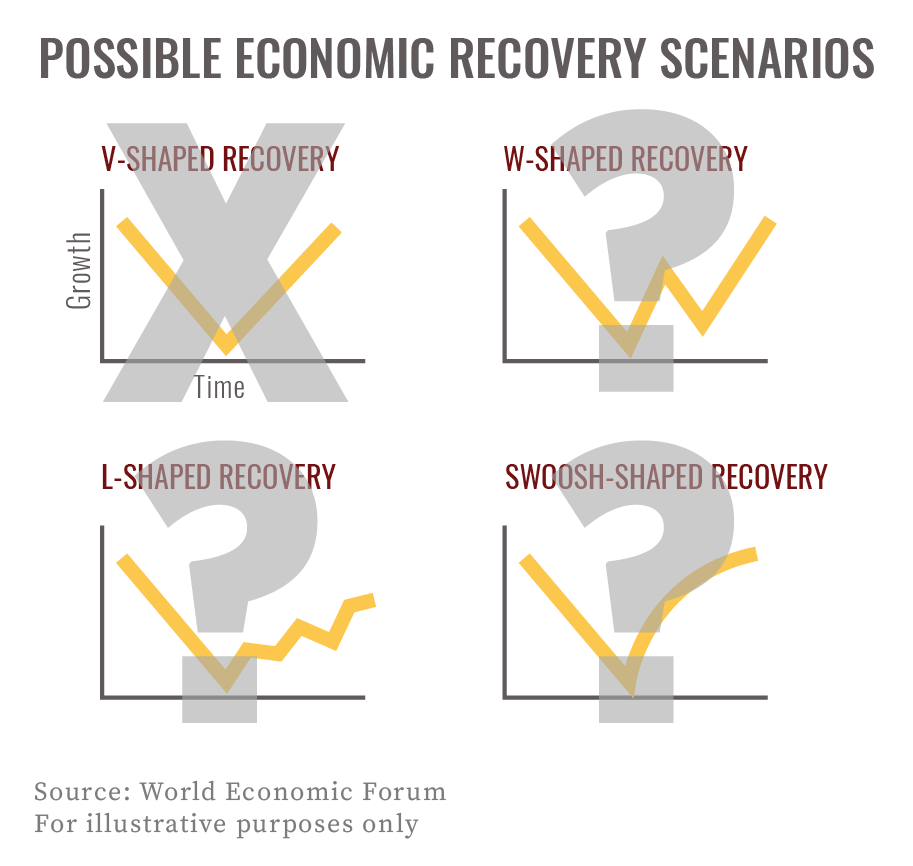
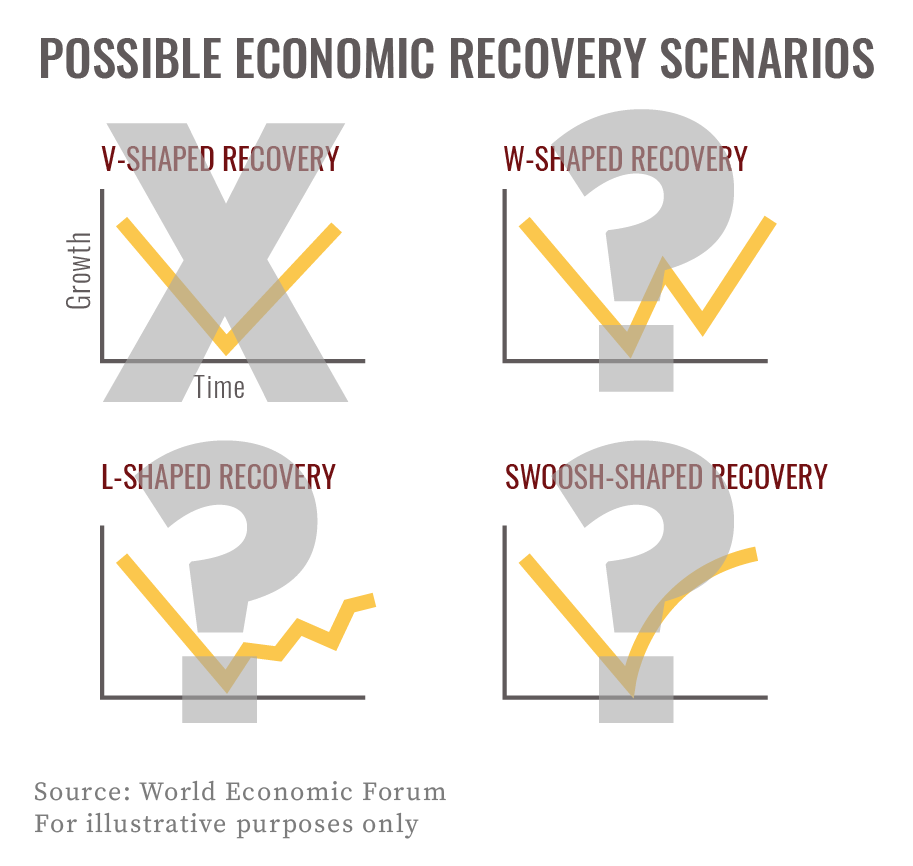
Well, hopes for the “V-Shaped” recovery economists wanted seem to be fading.1  Though businesses reopened and millions of people got their jobs back, millions more are still unemployed.2 And more layoffs are likely coming.3

Does that mean we’re still in a recession?

Technically, we won’t know until Q2 and Q3 economic data are released.

Best guess? We’re probably still in a recession.

The more optimistic recovery scenarios depended on containing COVID-19 infections so Americans could safely get back to business.

That…didn’t happen.

The question now is whether rising infection rates will put us in a “W-Shaped” double-dip recession, or a slower “L-Shaped” or “Swoosh-Shaped” climb back.

That’s all very interesting, but how does it affect us in Charlotte?

In many ways, our local economy is a microcosm of the larger state of affairs.

As COVID-19 cases have drifted back higher in the Queen City and North Carolina, we’ve still got a ways to go before we’re on solid ground.

Our ability to bounce back depends on a few things: 1) keeping infection rates down; 2) workers keeping the jobs they have and returning to the ones they lost; 3) folks shopping, eating out, and spending money locally.

In terms of markets, the recent gains make it clear that investors are looking past the current gloom to a hopefully rosy future.

Are they clairvoyant? Foolishly optimistic? Not optimistic enough?

I agree with Yale economist Dr. Robert Shiller’s take: he thinks this is a FOMO market driven by the Fear Of Missing Out.

Many investors regret not participating in the 2009 rally and are determined not to miss out again. That psychological narrative is pushing up the market even in the face of bad news.4

Will it continue?

We’re in earnings season and investors are waiting to see how badly U.S. companies were damaged last quarter.

Since many companies have refused to release earnings forecasts, we’re prepared for surprises. Positive and negative.

Bottom line: Buckle up, I think we’re in for a choppy ride.

Ok, so where’s the good news you promised? 

When times are tough and headlines are overwhelmingly negative, it becomes harder to find the good news. But it’s there:

  • A New Jersey hospital once described as a “war zone” now has zero COVID-19 patients.5
  • 17 COVID-19 vaccines are in human trials. At least one may be ready for approval by the end of 2020.6
  • 2 million folks gathered to plant trees in Northern India (while maintaining social distance).7
  • A young man who lost hope of attending college is headed to Harvard Law after the good people he met as a sanitation worker took him under their wings.8

Uplifting stories are out there if we look for them.


1https://www.washingtonpost.com/business/2020/07/11/after-fastest-recession-us-history-economic-recovery-may-be-fizzling/

2https://www.marketwatch.com/story/jobless-claims-tell-us-30-million-people-are-unemployed-but-many-doubt-its-that-bad-2020-07-08

3https://www.businessinsider.com/coronavirus-layoffs-furloughs-hospitality-service-travel-unemployment-2020

4https://www.project-syndicate.org/commentary/understanding-us-pandemic-stock-market-by-robert-j-shiller-2020-07

5https://www.nj.com/coronavirus/2020/07/once-called-a-war-zone-this-nj-hospital-now-has-zero-coronavirus-patients.html

6https://www.wsj.com/articles/german-biotech-sees-its-coronavirus-vaccine-ready-for-approval-by-december-11594373400

7https://apnews.com/f1d41fd4772742279da89e972dd8493d

8https://www.cnn.com/2020/07/07/us/sanitation-worker-harvard-law-trnd/index.html


What Navy SEALs Can Teach Us About Uncertainty

  • July 15, 2020/
  • Posted By : admin/
  • 0 comments /
  • Under : Behavior, Best Practices, Live Well

We’re dealing with more uncertainty than most of us have ever faced before. And as the months drag on, the stress of not knowing what comes next is taking a toll.

How do we make smart decisions when we’re stressed out and everything is uncertain?

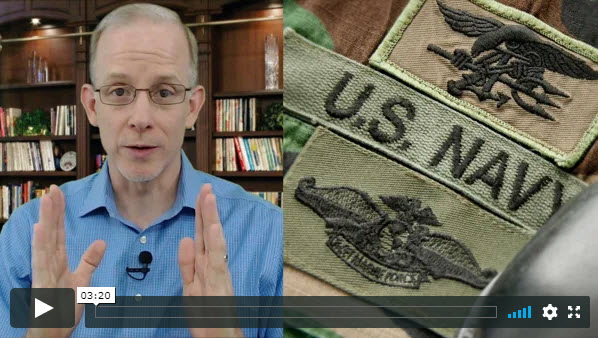
We made a quick video talking about what we can learn from how Navy SEALs deal with stress and uncertainty.

You can watch it here.

WATCH NOW


Stay strong,

Chris Mullis, Ph.D., CDFA®
Founding Partner


Midyear Outlook (important read)

  • July 7, 2020/
  • Posted By : admin/
  • 0 comments /
  • Under : Behavior, Economy, Seeking Prudent Advice

Dear Clients & Friends,

The first six months of 2020 saw the advent of the worst global public health crisis in a century — since the 1918 influenza pandemic. In response, the world locked down, putting its economy into a kind of medically induced coma.

In this country, the immediate effects were (1) a savage and nearly instantaneous economic recession, accompanied by record unemployment, and (2) the fastest, deepest collapse in stock prices in living memory, if not ever.

Though I usually write you an extended personal summary annually concerning the year past — and will again — the stark drama of the last half year has been such that I wanted also to report to you now.

This letter follows the format of my annual reports to you. It’s divided into two parts, the first a statement of general principles, especially those most relevant in the current crisis, with a restatement of how I practice my stewardship of our clients’ invested wealth. The second is a review of what little can be known at this point, and of how I propose we continue to deal with the pervasive uncertainties of the moment.


General Principles

• I believe that all lastingly successful investing is essentially goal-focused and planning-driven. All failed investing is market-focused and event-driven.

• Stated another way: every truly successful investor I’ve ever known was acting continuously on a long-term plan. Every failed investor I’ve known continually reacted to sudden and terrifying market shocks.

• Thus I’ve found that long-term investing success is only incidentally a function of the economy and the markets. It is a direct function of how the investor reacts—or, more properly, how he/she refuses to react.

• You and I are long-term, goal-focused equity investors, acting on our plan with patience and discipline. The smaller part of what I do for clients is the crafting of that plan. The much larger part is helping them not to react in stressful times like this.

• I continue to believe that the equity market can’t be consistently forecast, much less timed, and that the only certain way of capturing equities’ superior long-term returns is to sit through their occasionally steep but historically temporary declines.


Review and Outlook

• At midyear, the best that can be said is that the first great wave of the pandemic appears to be abating, and the economy is slowly reopening. As it continues to reopen, there will inevitably be some flareup in new infections. The interaction between the pandemic and the economy in the short to intermediate term is therefore perfectly impossible to forecast, as is the timing of the development of a vaccine.

• The equity market crashed from a new all-time high on February 19 to a bear market low (so far) on March 23, down 34% in 33 days. There is no historical precedent for this steep a decline in so little time. Confoundingly, it then posted its best 50 days in history. The S&P 500 closed out the first half at 3,100.3, 8.4% off its all-time high.

• It is not possible to forecast the near-term course of corporate earnings or dividends, as they — like the economy they reflect — are still largely hostage to the pandemic. That said, I invite your attention to the fact that at June 30 the yield on the 10-year U.S. Treasury note was less than 7 tenths of one percent.

• I infer from the current state of interest rates that though it is impossible to forecast equity earnings, dividends and prices, it can be stated as fact that few if any of my clients can continue to advance toward the achievement of their long-term financial goals in bonds, at anything close to today’s yields. This is just another reason why I’ve advised them to stay the course in equities.

• It should also be noted that even if the pandemic continues to subside and the economy to recover, investors will still have to deal with what may be the most widespread civil unrest in our country in decades, and what promises to be a bitterly partisan presidential election cycle. Emotions seem likely to continue to run high, with unpredictable short-term market consequences.

• I’ve very deliberately labored in this summary to convince you of the sheer unknowability of the short (say, the third quarter of 2020) to intermediate (say, through the first quarter of 2021) term economic and market outlook. In the next breath, I remind you that not one of you is investing for the next one to four calendar quarters. I say again: you and I are long-term, goal-focused, planning-driven, patient, disciplined investors. Our focus is on history rather than headlines, and our mantra is from Churchill: “The farther back you can look, the farther forward you are likely to see.”

• Finally, I would urge you to think back to January 1 of this year. Have your most cherished lifetime financial goals changed since then? If not, I see no compelling reason to change your plan — and no reason at all to change your portfolio.

• Be of good cheer. This too shall pass. Optimism remains, to me, the only long-term realism.


By all means, please be in touch with me with any and all questions and concerns. In the meantime, thank you — as always — for your interest.

Warmly,
Chris

Chris Mullis, Ph.D., CDFA®
Founding Partner
Financial Planning.
Wealth Management.
Since 2006AskNorthStar.com
(704) 350-5028

3 keys to success distilled from our 5,110-day journey

  • July 3, 2020/
  • Posted By : admin/
  • 0 comments /
  • Under : Live Well


I hope you’ll allow me to share something very special with you. Fourteen years ago today we launched our financial planning and wealth management practice framed upon three starkly beautiful motivations:

  • To do good
  • To do well by doing good
  • To be happy doing well by doing good

Helping families articulate, underwrite, and fully embrace their great lives is a profound mission that we take up with unyielding energy and commitment.

We are deeply grateful for all of the people who’ve helped us on our journey. From the early clients who trusted us from the get go to our friends and family who’ve lent their support in more ways than we can list here. We would not be where we are without each and every one of them.

It has been an exciting and educational arc of experience. As we look back, here are three essential lessons that we have learned:

  • Time is the key, not money.
    When we meet with prospective clients approaching retirement, universally they express regret that they didn’t get organized and motivated about finances until late in their professional lives. “I wish I would have found you 20 years ago” is the common refrain. Money is a commodity. Time is the precious resource.
  • Inertia is the enemy.
    “If you do the same thing you’ve always done, you will get the same thing you’ve always gotten.” Whatever path you are on, look up to the horizon to see where it leads. If you do not like where you are headed, you must pull up the stakes and change direction…NOW!
  • All successful investing is goal-focused and planning-driven.
    All failed investing is market-focused and performance-driven. All successful investors are continuously acting on a plan. All failed investors are continually reacting to the markets.

The bedrock of our enterprise remains, and will always be, the following:

Thoughtful planning and disciplined investing can be the keys that unlock incredible potential for the good of our clients, their families, and their cherished communities.

As we look forward to the decades to come of serving our clients and our community, know that we are constantly working to deliver superior financial outcomes and to see our clients live their best lives.

Thank you for allowing me to share this milestone and these thoughts with you. Here’s to your continued success!

With gratitude for the past and optimism for the future,

Chris Mullis, Ph.D., CDFA®
Founding Partner

Roth conversion in 2020?

  • June 30, 2020/
  • Posted By : admin/
  • 0 comments /
  • Under : Retirement

Can you take advantage of 2020’s bear market to generate tax-free income through a Roth conversion?

You’ve probably heard that Roth IRAs are great for generating tax-free income and avoiding Required Minimum Distributions in retirement.

and…

2020’s market losses make it a good year to consider a conversion so you minimize the taxes you pay on the money you convert.

But the details matter a lot. And new laws mean conversions are permanent.

We made a short video showing you how to decide if you should consider a Roth conversion this year.

Check it out here!

WATCH NOW


If you’ve got a question or concern you’d like us to talk about in a future video, email info@nstarcapital.com and let us know! We’d love to hear your feedback.


Financial Order of Operations

  • June 24, 2020/
  • Posted By : admin/
  • 0 comments /
  • Under : Financial Planning

One of the pillars of financial success is doing the right things in the right order.  My informal term for this is F.O.O. — Financial Order of Operations.

That phrase may sound slightly cumbersome, but the conceptual framework is a life changer!

I’ve recorded this special video for you that lays out a roadmap for deploying your army of dollar bills.  Watch now to learn exactly what you should do with each successive dollar you have.

You can watch it here.

WATCH NOW


Following the F.O.O. will strengthen your financial success and allow you to live your best life.

If you have any questions about the particulars of your Financial Order of Operations, please don’t hesitate to reach out.

Thank you and be well,

Chris Mullis, Ph.D., CDFA®
Founding Partner

What Issues Should I Consider For My Aging Parents?

  • June 2, 2020/
  • Posted By : admin/
  • 0 comments /
  • Under : Financial Planning

Becoming a caregiver for aging parents can be a drain emotionally and can carry financial ramifications both for parents and for the caregiver children. Helping understand and manage the financial issues involved can make the situation a bit easier all.

In this guide, we cover a number of financial issues that you need to consider when faced with helping and potentially caring for aging parents, including:

  • Be sure you examine your parents’ finances to determine if they are able to manage their own expenses. There may be sources of income available to your parents of which they are unaware.
  • It’s important that you be sure you have access to their parents’ important documents such as any estate planning documents. You should have the names and contact information for any advisors your parents use such as an attorney, financial advisor or accountant.
  • If your parents need long-term care, they will need to investigate ways to cover the cost. Medicaid planning or a reverse mortgage might be options.
  • If the estate of your parents is over a certain amount, then they may have an estate tax issue. It’s also important for you to ensure that your parents’ beneficiary designations on insurance policies and retirement plans are up to date, and that they reflect their wishes.
  • It’s important for you to ensure that your parents’ tax situation is in order, managing any capital gains or losses, as well as fully utilizing any deductible medical expenses.
  • Overall, it’s helpful to stress the benefit of having a handle on all of your parents’ assets, liabilities and all related financial issues as a time may come when your parents are unable to manage their own affairs.

This is a comprehensive guide to the types of financial issues that you consider when helping your aging parents.


3 cognitive biases that cheat most investors (and how to beat them)

  • May 27, 2020/
  • Posted By : admin/
  • 0 comments /
  • Under : Investing 101

“The investor’s chief problem – and even his worst enemy – is likely to be himself.” — Benjamin Graham

If you’re looking at headlines or feeling the pressure of the downturn, it’s easy to think you’re not in control.

And it’s true—you have limited control over external circumstances (like the pandemic). But you have complete control over yourself and your behavior.

Times like these are when it’s most important to dig deep, root out bad habits, and come out on the other side mentally stronger than before.

We made a short video showing you exactly how you can overcome the hardwired biases that can cheat you, including the huge mental trap that even Warren Buffett has to fight.

(You’ll have to watch the video to find out what it is!)

You can watch it here.

WATCH NOW

« First‹ Prev891011121314Next ›Last »
Recent Posts
  • The Exposed Cranium Nebula
    Timing Social Security and Taming Scary Markets March 5,2026
  • Egg Nebula
    Don’t Make These Mistakes on Your Tax Return February 19,2026
  • Gayle Riggsbee & Chris Mullis
    Tuscan Sun or Fool’s Gold? Navigating Global Moves and Market Hype February 5,2026
  • Cloud-9
    Spend It or Lose It? The Truth About Early-Retirement Spending Habits January 22,2026
  • Fomalhaut System
    Estimated Taxes, Marriage 2.0 and Cosmic Bumper Cars January 8,2026
Archives
  • March 2026
  • February 2026
  • January 2026
  • December 2025
  • November 2025
  • October 2025
  • September 2025
  • August 2025
  • July 2025
  • June 2025
  • May 2025
  • April 2025
  • March 2025
  • February 2025
  • January 2025
  • December 2024
  • November 2024
  • October 2024
  • September 2024
  • August 2024
  • July 2024
  • June 2024
  • May 2024
  • April 2024
  • March 2024
  • February 2024
  • January 2024
  • December 2023
  • November 2023
  • October 2023
  • September 2023
  • August 2023
  • June 2023
  • May 2023
  • April 2023
  • March 2023
  • February 2023
  • January 2023
  • November 2022
  • October 2022
  • September 2022
  • August 2022
  • July 2022
  • May 2022
  • April 2022
  • March 2022
  • February 2022
  • December 2021
  • October 2021
  • September 2021
  • August 2021
  • July 2021
  • June 2021
  • May 2021
  • April 2021
  • March 2021
  • February 2021
  • January 2021
  • December 2020
  • November 2020
  • October 2020
  • September 2020
  • August 2020
  • July 2020
  • June 2020
  • May 2020
  • April 2020
  • March 2020
  • November 2019
  • October 2019
  • June 2019
  • May 2019
  • April 2019
  • March 2019
  • February 2019
  • January 2019
  • December 2018
  • November 2018
  • October 2018
  • September 2018
  • August 2018
  • July 2018
  • June 2018
  • May 2018
  • April 2018
  • March 2018
  • February 2018
  • January 2018
  • December 2017
  • November 2017
  • October 2017
  • September 2017
  • August 2017
  • July 2017
  • June 2017
  • May 2017
  • April 2017
  • March 2017
  • February 2017
  • January 2017
  • December 2016
  • November 2016
  • October 2016
  • September 2016
  • August 2016
  • July 2016
  • June 2016
  • May 2016
  • April 2016
  • March 2016
  • February 2016
  • January 2016
  • December 2015
  • November 2015
  • October 2015
  • September 2015
  • August 2015
  • July 2015
  • June 2015
  • May 2015
  • April 2015
  • March 2015
  • February 2015
  • January 2015
  • December 2014
  • November 2014
  • October 2014
  • September 2014
  • August 2014
  • July 2014
  • June 2014
  • May 2014
  • April 2014
  • March 2014
  • February 2014
  • January 2014
  • December 2013
  • November 2013
  • October 2013
  • September 2013
  • August 2013
  • July 2013
  • June 2013
  • May 2013
  • April 2013
  • March 2013
  • February 2013
  • January 2013
  • December 2012
  • November 2012
  • October 2012
  • September 2012
  • August 2012
  • July 2012
  • June 2012
  • May 2012
  • April 2012
  • March 2012
  • February 2012
  • January 2012
  • December 2011
  • November 2011
  • October 2011
  • September 2011
  • August 2011
  • July 2011
  • June 2011
  • May 2011
  • April 2011
  • March 2011
  • February 2011
  • January 2011
  • November 2010
  • October 2010
  • September 2010
  • August 2010
Categories
  • 401(k)
  • Annuities
  • Behavior
  • Best Practices
  • Bonds
  • Charitable Donations
  • Economy
  • Fees
  • Fiduciary
  • Financial Planning
  • Investing 101
  • Live Well
  • Market Outlook
  • Mutual Funds
  • NorthStar
  • Performance
  • Personal Finance
  • Planning
  • Retirement
  • Saving Money
  • Scams & Schemes
  • Seeking Prudent Advice
  • Tax Planning
  • Uncategorised
  • Uncategorized
  • Weekly Market Review
ABOUT US

We are a fee-only, independent fiduciary advisor. Our allegiance rests solely with our clients and their best interests. We are headquartered in Charlotte, North Carolina and serve client families across the nation.


CLIENT TOOLS
CONTACT
  • (704) 350-5028
  • info@nstarcapital.com
  • 521 East Blvd, Charlotte, NC 28203
    (by appointment only)
  • fax: (704) 626-3462
RETIREMENT ISN’T ROCKET SCIENCE PODCAST
  • The Exposed Cranium Nebula
    Timing Social Security and Taming Scary Markets March 5,2026
  • Egg Nebula
    Don’t Make These Mistakes on Your Tax Return February 19,2026
  • Gayle Riggsbee & Chris Mullis
    Tuscan Sun or Fool’s Gold? Navigating Global Moves and Market Hype February 5,2026
Nothing on this website constitutes either the provision of investment advice or solicitation to provide investment advice.
Investment advice can only be provided through a formal investment advisory relationship.