
NorthStar Capital AdvisorsNorthStar Capital AdvisorsNorthStar Capital AdvisorsNorthStar Capital Advisors
Start Here
  • How We Help
  • Who We Serve
  • Who We Are
  • Fiduciary
  • Podcast
  • Start Here
  • How We Help
  • Who We Serve
  • Who We Are
  • Fiduciary
  • Podcast
  • Start Here

When whales fight

  • February 15, 2022/
  • Posted By : admin/
  • 0 comments /
  • Under : Economy

As we consider the tensions driving recent market movements, a Korean folk saying seems apt:

“When whales fight, the shrimp’s back is broken.”

The idea is that bystanders get hurt when big folks duke it out.

What are the tensions? Who are the bystanders?

Let’s discuss.

An invasion of Ukraine may occur in the coming days or weeks.

Or it might not. It’s really impossible to say.

The U.S. has closed the embassy in Kyiv and warned of a dramatic buildup of Russian forces on the border with Ukraine.1

It’s unclear whether Russia is willing to diplomatically resolve security concerns about Ukraine joining NATO.2

However, a ground war between NATO and Russia would be extremely damaging, so it seems (hopefully) unlikely that Russian troops would actually invade.

Then again, they might.

That seesaw between high tension and relief is likely to add a lot of volatility to markets as investors digest the latest news.

The Federal Reserve may aggressively raise interest rates to fight inflation.3

With inflation at historic highs, some Fed officials worry that the central bank’s credibility — AKA, their ability to manage inflation and employment — is on the line.

Rate hikes are coming in 2022, but how many and how quickly? That’s up for debate by the Federal Open Market Committee next month.

Fed “hawks” want to raise rates quickly to try to bring inflation under control and increase consumer confidence and trust.

Fed “doves” want to carefully raise rates and watch the data to avoid damaging growth or spooking markets.

These are big decisions with big consequences for us, the economy, and markets.

While FOMC meetings are often dry affairs, the next one looks to have as much drama as an episode of Succession.

We’ll stay tuned.

Bottom line: there are a lot of factors driving market movements, so we can expect to see plenty of volatility in the weeks to come.

Given the Fed and geopolitical tensions at play, a pullback or correction would not be surprising, either.

What can we do when we’re facing major events we can’t control?

Take a deep breath, be grateful for all the good in our lives, and focus on our strategy.

(And email us with questions or concerns.)

Let’s hope for peace and clarity in the weeks to come.

We’re keeping a close watch and will reach out as needed.

Be well,
Your NorthStar Team

P.S. Looking for a mental break? Here’s an interesting TEDx talk on “The Science and Power of Hope.” It’s given by Dr. Chan Hellman, whose research focuses on the psychological power of hope to overcome adversity and create change.

Let us know what you think!

1https://www.cnbc.com/2022/02/13/stock-market-futures-open-to-close-news.html

2https://www.bbc.com/news/world-europe-60379833

3https://www.cnbc.com/2022/02/14/bullard-say-the-fed-needs-to-front-load-tightening-because-inflation-is-possibly-accelerating.html


How to make the most of life’s most important $$ lessons

  • February 8, 2022/
  • Posted By : admin/
  • 0 comments /
  • Under : Personal Finance
What’s the first big lesson you learned about money?

How did you learn it?

Many of us start learning about finance as kids.1

We watch those around us, and we learn by trial and error.2

That can teach us some important basics about finance. And it can open the door to learning some of life’s major lessons about money.

What are those lessons and when’s the best time to learn them?

When it comes to life’s lessons about money, you can’t always expect to learn them in school — and the sooner you know them, the better.

Those life-changing finance lessons are the focus of this month’s Visual Insights Newsletter.

Click here to see it!

The lessons we pick up about money can influence our choices, and they can stick with us for life.

No matter when you learn them, it’s never too late to find better ways to leverage them.

Go ahead and click here to check out the 5 powerful money lessons you’ll wish you knew sooner.

1 – https://www.businessinsider.com/personal-finance/why-we-need-to-teach-kids-about-money-2021-10
2 – https://youth.gov/youth-topics/financial-capability-literacy/facts


Powerful 2022?

  • December 30, 2021/
  • Posted By : admin/
  • 0 comments /
  • Under : Live Well
What do you think about starting a new year with resolutions and goals?

Do you like to plan your year that way or do you prefer to just wing it?

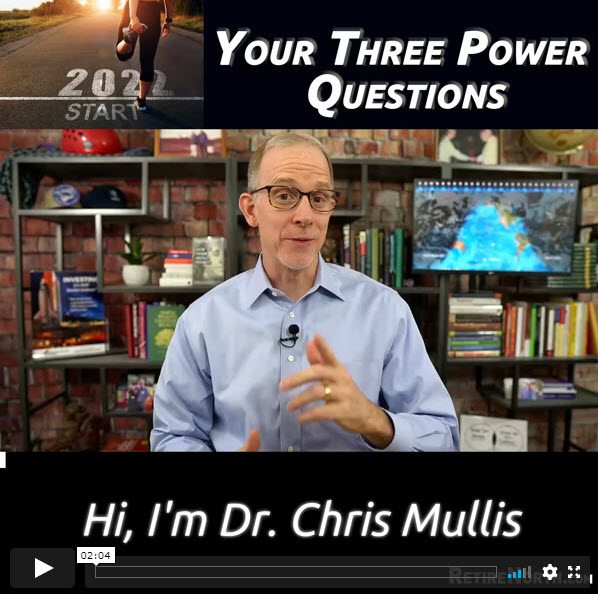
We made a quick video talking about three simple (but powerful) questions you can use to set the stage for an amazing 2022.

You can watch it here.


Transcription:

Hi, I’m Dr. Chris Mullis with NorthStar Capital Advisors, and I’m here to help you launch 2022 with a great mindset.

In this video, I’m going to talk about three simple (but powerful) questions you can ask yourself to set the stage for an amazing year, even when so much around us is unpredictable and up in the air.

One question before we start: why set goals or intentions at all?

Sure, you could just show up and wing it, but if you’re watching this video, I bet you’re someone who wants more out of life.

And starting your year with a focus on where you want to go, is a great way to be more mindful of what you take on and how you spend your time.

What do you want more of this year?
Is it time? Travel? Experiences?
Commit them to paper.

How do you want to show up for your family, your friends, and your community?

Who is most important to you and how can you invest in those relationships?

What do you want to get better at this year? Personally? Professionally? Mentally? It’s all fair game.

As we close the door on 2021 and set the stage for 2022, there’s a lot that is beyond our control.

That’s why setting a direction is so critical: we can achieve incredible things by paying attention to what’s most important to us and intentionally focusing on improvement.

To throw a sports analogy at you: a player can’t control whether their team makes it to the championship, but they can improve their odds by perfecting a skill, improving their mental game, and supporting their teammates.

Thanks for watching. If you have a question about what I’ve discussed with you or you’d like to speak personally about what’s going on, please send me a message. I’ll respond personally.

Whatever 2022 holds, I hope it brings you joy, excitement, and prosperity.


A Teachable Moment

  • December 5, 2021/
  • Posted By : admin/
  • 0 comments /
  • Under : Market Outlook

Click image to view speech 

Today marks a most significant anniversary in the economic and financial history of the United States, and I could not let it pass without comment. When properly appreciated, it can serve as an importantly teachable moment.

For it was a quarter century ago, on the night of Thursday, December 5, 1996, that the iconic Federal Reserve chairman Alan Greenspan, speaking at a dinner of the American Enterprise Institute in Washington, gave his instantly legendary “irrational exuberance” speech.

And this is what the oracle said. Or more accurately, this is what he asked:

“How do we know when irrational exuberance has unduly escalated asset values, which then become subject to unexpected and prolonged contractions as they have in Japan over the past decade? And how do we factor that assessment into monetary policy?” [43:38 in the video above]

Mr. Greenspan asked these twin rhetorical questions essentially because he did not have conclusive answers. And if he didn’t, you knew no one else in the world did either. But coming from him, even this interrogative form of thinking out loud was a financial thunderbolt — a shot heard round the world.

He surely understood that, when he so much as broached the question, he had at least suggested an answer. And that answer was unmistakably: we’re either already there, or will be mighty soon, as this greatest of all bull markets morphs into mania.

I thought it might be instructive — as well as a certain amount of good fun — to cast an eye over the intervening quarter century. Let’s begin with a key item of baseline data that may and certainly should inform our inquiry.

Fact: The Standard & Poor’s 500 Stock Index had closed that Thursday afternoon, in blissful ignorance of what was coming later in the evening, at 744.38. And sure enough — just as the oracle had darkly suggested it must — the S&P 500 topped out…three years, three months and 19 days later, on March 24, 2000, at 1,527.50. You read that right: it more than doubled in the 40 months after Greenspan’s dire warning.

I suppose I could just stop here, invite you to draw the obvious inference from the above, and call it a day. Said inference is, of course: No one — no central banker, no economist, no market strategist, no hedge fund manager — no one can predict the market, much less tell you where to get out and/or back in. The economy cannot be consistently forecast, nor the market consistently timed. By anyone.

But before I let you go, I’d just like to throw out a very few other potentially relevant factoids.

  • Friday afternoon, December 3, the S&P 500 closed at 4,538.43, up more than six times since Greenspan spoke.
  • With dividends reinvested, and any taxes paid from some other source, $10,000 invested in the S&P 500 on 12/4/96 is getting pretty close to $100,000 along about now.
  • The earnings of the S&P 500 for the year 1996 were $40.63. With less than a month to go in the current year, the consensus forecast is around $200, up almost exactly five times.
  • The S&P 500’s cash dividend in 1996 was $14.90. Consensus forecast for this year is about $60, up almost exactly four times. 
  • The Consumer Price Index was 158.6 in December 1996. It will most likely close out this year around 280, up a mere 1.8 times.

What, then, was the single best financial decision you could have made on Thursday night, December 5, 1996 — when the 11 o’clock news breathlessly reported Greenspan’s electrifying remarks? Right: turn off the TV and go to bed.

Just my opinion, of course, but the best move you can make this morning, 25 years on, regardless of the headlines? The same: turn off the TV, log out of your computer. Enjoy the rest of your day.

And let the compounding proceed, uninterrupted.

With every good wish,
Dr. Chris Mullis

Sources:
Historical S&P 500 Index and dividends: “S&P 500 Earnings History, NYU Stern School”
Consensus 2021 earnings forecast: Yardeni Research
Consensus 2021 dividend forecast: Bloomberg
Consumer Price Index: Inflationdata.com
Current net profit margin of the S&P 500: FactSet


How do you select the ultimate gift?

  • December 1, 2021/
  • Posted By : admin/
  • 0 comments /
  • Under : Personal Finance

Let’s face it. Buying meaningful gifts for our family and friends is really, really hard.

If you want to give something that has a larger impact long after the holiday season has passed, why not give the gift of financial knowledge and wisdom for living a fulfilled life?

Given the academic background of our firm, we know the following is going to be a big shocker:We really love reading books and giving books as gifts!

Below you’ll find our 2021 Guide to Gifts That Pay Off.

It’s full of our 23 favorite money-related and living-big gift recommendations for those ages 4 to 94!

Let us highlight a couple of our new recommendations this year:

  • The Total Money Makeover (Dave Ramsey)
    A proven plan for financial fitness
    We love giving this book out to our clients for their adult children. And we like to give these out as graduation and wedding gifts with a $100 bill tucked inside. About 80% of this book is really good, but we (and history) may not agree with perhaps the other 20% (e.g., unrealistic investment return assumptions; over-reliance on growth investments; unsustainably high withdrawal rates in retirement). Nonetheless, Mr. Ramsey does a great job of teaching the basics of money.
  • The Price You Pay for College (Ron Lieber)
    An entirely new road map for the biggest financial decision your family will ever make
    One of our savvy clients in Washington, D.C. brought this 2021 book to our attention and it’s excellent! This book discusses why college costs so much, digs into the allure of elite schools, uncovers hacks that may not really be hacks, and talks about how to plan and pay for college.
  • Knocking on Heaven’s Door (Katy Butler)
    The path to a better way of death
    While it can be very difficult, having tough conversations about end-of-life care well in advance can help our dying loved ones cope later on. We have the ability to cultivate a “good death.” Give this book to your parents if they are still living and discuss it with them. And depending on your age, give it to your spouse and discuss it with them.
  • Retirement Heaven or Hell (Michael Drak et al.)
    9 principles for designing your ideal post-career lifestyle
    Don’t be fooled, the transition to retirement is a very difficult transition for many. To retire well you need enough purpose to wake up in the morning and enough money to sleep at night. Taking the time to read this book, reflect, explore, and be intentional will mean the difference between ending up in “retirement heaven” and “retirement hell.”

So what is the ultimate gift of 2021?

Life-changing wisdom about managing your money and living your best life that you can give to those that you truly care about!

Happy gifting,
The NorthStar Team

2021 NorthStar Guide To Gifts That Pay Off


Children

Money Ninja: A Children’s Book About Saving, Investing, and Donating
Young readers learn how money can work for them instead of spending it.

Money Savvy Pig
The piggy bank for the 21st century!
Finance 101 for Kids: Money Lessons Children Cannot Afford to Miss
Informative and entertaining book to help children get on the right path to making smart personal financial decisions.


Teenagers

O.M.G. Official Money Guide for Teenagers
How to turn pocket money into power and freedom

Cash Cache
The award-winning personal finance organizer for teens!

What Color Is Your Parachute for Teens
Career guide for teens to help zero in on their favorite skills and find their perfect major or career


College Students

Why Didn’t They Teach Me This in School?
99 personal money management principles to live by

Adulting 101: #Wisdom4Life
A complete guide on life planning, responsibility and goal setting

They Don’t Teach Corporate in College
A twenty-something’s guide to the business world


Young Professionals

Generation Earn
Young professional’s guide to spending, investing, and giving back

The Total Money Makeover
A proven plan for financial fitness

Jumpstart Your Marriage & Your Money
Guide to help couples stop worrying about money and start building wealth together.


Parents with Children at Home

Raising Financially Fit Kids
Help prepare your children for a lifetime of smart money decisions

The Opposite of Spoiled
Raising kids who are grounded, generous, and smart about money

The Price You Pay for College
An entirely new road map for the biggest financial decision your family will ever make


Adults

Happy Money
Are you getting the biggest happiness bang for your buck?

5 Book
Where will you be five years from today?

Life Reimagined
The science, art, and opportunity of midlife

Retirement Heaven or Hell
9 principles for designing your ideal post-career lifestyle

I’ve Decided to Live 120 Years: The Ancient Secret to Longevity, Vitality, and Life Transformation
Ignite the true spirit of what it means to live fully


Caregivers & Golden Agers

Being Mortal
Medicine and what matters in the end

On Living
An uplifting meditation on how important it is to make peace and meaning of our lives while we still have them

Knocking on Heaven’s Door
The path to a better way of death


Gut check (on your job)

  • October 27, 2021/
  • Posted By : admin/
  • 0 comments /
  • Under : Economy
How are you feeling about work these days?

Are you taking stock of your life and thinking about moving on? (You’re not alone.)

Are you a boss struggling to fill roles and retain your people? (You’re in good company.)

America is going through a pretty major reconfiguration of the labor market.

Headlines are calling it the “Great Resignation” but I think it’s deeper than that.

The pandemic threw many assumptions out of the window. It caused us to think long and hard about a lot of things.

Where we work. How we work. What work means. What we want out of life.

That existential crisis is visible on the supply side of the labor market:

Folks retiring ahead of schedule (not all by choice).1

Folks quitting their jobs.2

Folks (primarily women) caring for kids and family instead of going back to work.3

Folks striking over pay and working conditions.4

Folks starting new businesses.5

And it’s visible on the demand side as well:

Restaurants struggling to staff up.6

Shipping ports clogging up because there aren’t enough truckers to haul goods away.7

Employers offering higher wages and perks to attract job seekers.8

At its most basic level, employment is a transaction: a certain amount of work for a certain amount of pay.

But it’s really much more than that.

For many of us, who we are as a worker…

A business owner…

A boss…

Is central to our identity.

And the ground is shifting under our feet. That makes folks anxious.

High-anxiety times like these bring plenty of judgment, blame, and dramatic headlines.

Are workers who don’t want to take low-paying, high burnout jobs lazy?

Of course not.

Are business owners worried about keeping their doors open evil capitalists?

Nope.

Are employees organizing strikes or leaving for better opportunities disloyal?

No way.

We’re all doing the best we can every day.

When we see talking heads griping about “entitled” workers or “greedy” businesses, let’s remember that behind the numbers are real people with real struggles.

A parent with a medically fragile kid who is afraid to go back to work.

A business owner who worries the staffing shortage will put her out of business.

A laid-off worker who doesn’t have the skills needed to get a different job.

A manager who is doing two jobs because he can’t fill a key role.

Let’s be compassionate toward one another.

What does the labor market upheaval mean for the economy?

That’s hard to say.

It could cause a slowdown in some sectors if businesses struggle to fulfill demand.

It could lead to increased inflation if higher wages get passed on as higher prices.

It could be a factor in a market correction.

It could also accelerate trends toward automation, remote work, and offshoring.

Bottom line: Like most major events in history, the overall consequences won’t be fully visible for a long time.

1https://www.economist.com/the-economist-explains/2021/09/28/why-are-americans-retiring-earlier
2https://news.yahoo.com/why-american-workers-are-quitting-in-record-numbers-151116968.html
3https://www.pbs.org/newshour/economy/the-pandemic-was-a-breaking-point-for-caretakers-will-it-be-a-turning-point
4https://www.reuters.com/world/us/enoughs-enough-tight-us-job-market-triggers-strikes-more-pay-2021-10-18/
5https://www.gspublishing.com/content/research/en/reports/2021/10/04/be005ed1-1b6b-42f7-af9b-fb209077ca35.html
6https://www.wboy.com/news/health/coronavirus/restaurants-continue-to-face-staffing-shortages/
7https://edition.cnn.com/2021/10/14/business/supply-chain-ports-biden-inflation/index.html
8https://www.retaildive.com/news/retailers-are-betting-on-wage-hikes-perks-to-woo-workers-ahead-of-the-holi/607815/


Will your taxes go up under the new proposal?

  • September 22, 2021/
  • Posted By : admin/
  • 0 comments /
  • Under : Tax Planning
By now, you’ve likely seen that the House Ways and Means Committee released a draft of major tax legislation last week.

What’s ahead?

Significant changes to U.S. tax policy for 2022 seem likely, including around income tax rates, rules regarding retirement accounts, estate and transfer laws and much more.

Many of the features of Biden’s original plan are included in the House plan, most significantly the raising of income and capital gains tax rates on high earners.

The changes that have been made suggest that a lot of negotiations have already taken place among Democrats so, if the legislation becomes law, its final form will likely be similar to the House plan.

How will this impact you?

We’ve already parsed through the draft and have started building some of the proposed changes into our tax planning tools so that we will be able to illustrate, on a “what if” basis, the potential impacts to our clients compared to the current tax law.

While we do that, we wanted to provide you with a quick summary of some of the key points of the proposed legislation (as best as we can glean at the present time):

  • Single filers with income below $400,000 and Married Filing Joint filers with income below $450,000 will probably not see significant impact right away. 
  • Taxpayers with income over those thresholds should expect higher marginal rates and higher capital gains rates.  
    • The bill brings back the 39.6% marginal bracket on ordinary income while compressing the existing 32% and 35% brackets.
    • For folks over the $400K/$450K thresholds, capital gains increase from 20% to 25%. While unpleasant, recall that President Biden’s original proposal included a top capital gains rate of 39.6%. 
  • The strategy of making non-deductible IRA contributions and then converting them to a Roth IRA – or the “backdoor Roth” – looks like it’s on its way out starting in 2022.  The same goes for the “mega backdoor Roth” strategy inside of 401k plans. 
  • Increases to both the Child Tax Credit and the Child and Dependent Care Credits.
  • Elimination of Roth conversions for folks over the income thresholds…but not until 2031!
  • The gift and estate tax exemption amounts would effectively be cut in half starting in 2022. That would still be over $5 million/person, though. 
  • Application of the 3.8% Net Investment Income Tax (NIIT) to S-corp distributions for taxpayers with income higher than $400,000 (individual) or $500,000 (married filing jointly). 
  • Limitations of the QBI Deduction (199A deduction) for high income taxpayers 

There’s plenty more in the bill, but these are the points that seem to apply to the most people.

One additional item worth keeping track of is a 3% surcharge on very, very high-income people. But that’s also going to apply to trusts with income of over $100,000. For clients who have left IRAs to a trust for the benefit of minor children, this income threshold may come faster than you think given the 10-year requirement to deplete an inherited IRA.

REMEMBER: Tip your server, not the IRS

The legislation will now be debated in Congress and finalized in the weeks to come.

We continue to monitor developments and strategize around this plan to give you the best possible outcomes when this new tax reality arrives.


Taper tantrum part deux?

  • August 31, 2021/
  • Posted By : admin/
  • 0 comments /
  • Under : Economy
One big thing you may have heard about in the headlines is the Federal Reserve’s hint that it might start “tapering” soon.1

Could the Fed’s actions cause a market correction or economic slowdown?

Let’s discuss.

First of all, what does ”tapering” mean?

In econ-speak, tapering means winding down the pace of the assets Fed has been buying since last summer.

Why is it a big deal?

Well, the last time the Fed tapered in 2013, during the recovery from the 2008 financial crisis, markets panicked and pitched a “taper tantrum.”2

That’s because traders worried that less Fed support would hurt fundamentals and potentially cause a market downturn.

Now, that old taper tantrum narrative is making folks worry that another market downturn could be ahead of us, especially with concerns about the Delta variant.

Before we dive into what could happen, let’s talk about where we are and how we got here.

When the pandemic started, the Fed slashed interest rates and began buying $120 billion a month in bonds and mortgage-backed securities to reduce interest rates, lower borrowing costs, and give businesses and the economy a boost.1

However, now that the economy is much stronger, the employment situation has improved, and inflation is a concern, the Fed wants to start paring back those asset purchases to return interest rates to a more “natural” level.

What could that look like?

Obviously, we don’t know exactly when or how the Fed will decide to act, but analysts have some pretty good guesses.

The latest prediction by Bank of America suggests tapering could start this November as the Fed gradually pares back asset purchases through next year.1

The takeaway is that the Fed isn’t going to stop buying assets and raise interest rates immediately.

It’s going to gradually remove the support and see how the economy reacts.

So, will we see another taper pullback?

The main reason folks worry about the Fed reducing support is because of the effect higher interest rates could have on stocks, particularly companies that rely on borrowed money.

However, interest rates are just one piece of the puzzle. Economic fundamentals, earnings, and other factors also weigh on stock prices.

With the benefit of hindsight, we can see that the 2013 taper tantrum wasn’t even that bad. The S&P 500 tumbled 5.8% over the course of a month, but quickly recovered (the caveat here is always this: the past does not predict the future).2

(Sidebar — keep in mind the 2013 taper tantrum decline of 5.8% was less than half of the the average intra-year decline of 13.8% annually that we typically see in the stock market.  I.e., yet another piece of “noise”…a semi-random, temporary decline overlaid on the market’s permanent, long-term advance.)

We think the main reason markets declined in 2013 was that investors hadn’t experienced tapering before; they didn’t have context for what the Fed would do.

Since we’ve seen this happen before fairly recently, we think that uncertainty is lessened.

However, we also have other worries to consider: a deteriorating crisis in Afghanistan, continued pandemic worries, and political wrangling over infrastructure.

Any of these factors could derail the bull market.

But it’s not going to be the end of the world.

Pullbacks, corrections, and bear markets are always something we should expect. They happen regularly and are a natural part of markets.

Bear markets are common — they occur about 1 in 5 years and there have been 16 since World War II. With the average retirement lasting 30 years, you should expect to encounter 6 bears during this encore of your life.

So, the Fed is one more thing we’re keeping an eye on, and we’ll reach out if there’s more you should know.

1 https://markets.businessinsider.com/news/bonds/fed-taper-asset-purchases-november-bonds-mbs-federal-reserve-economy-2021-8
2 https://www.barrons.com/articles/stock-market-taper-scare-what-comes-next-51629505091


We’ve come so far

  • August 18, 2021/
  • Posted By : admin/
  • 0 comments /
  • Under : Economy
Headlines are looking grim again, so let’s pause and take stock.

Why are the headlines terrible?

Because the media loves drama. This is not news to you or us or anyone who pays attention. The 24-hour news cycle is there to whip up emotions and keep us glued to the latest “BREAKING NEWS.”

So, what’s behind the noise and should we worry?

Before we jump into unpacking the news, let’s take a moment and remind ourselves of how far we’ve come since the pandemic began.

You can see it right here in this chart:

We’ve recovered the vast majority of jobs lost since the bottom of the pandemic’s disruption last April. The economy is still missing several million jobs to regain pre-pandemic levels, but we’ve made up a lot of ground, and jobs growth is still strong.1

In fact, there are more job openings right now than job seekers to fill them.2

But there’s an important caveat to the chart above.

The monthly jobs report is what economists call a “lagging” indicator, meaning that it’s telling us where the economy was, not where it’s going.

To figure out what might lie ahead, economists turn to “leading” economic indicators that help forecast future trends.

So, what are the leading indicators telling us about the economy?

A couple of the most popular indicators are manufacturing orders for long-lasting (durable) goods, since companies don’t like to order expensive equipment unless they expect to need soon.

Another one is groundbreaking (starts) on new houses, which indicate how much demand builders expect for housing.

Let’s take a look:

Both indicators suggest continued (if bumpy) growth. Now, those are just two sectors, and we want to be thorough, so let’s take a look at a composite.

The Conference Board Leading Economic Index (LEI) gives us a quick overview each month of several indicators.

It increased by 0.7% in June, following a 1.2% increase in May, and a 1.3% increase in April, showing broad, but slowing growth.3

What does that tell us? That the economy still has legs.

Will the Delta variant derail the recovery?

New numbers came out this morning showing that retail sales fell slightly (1.1%) in July from the month before, with spending down broadly across categories as concerns about the Delta variant grew.

But most economists, while acknowledging the threat posed by the current rise in Covid cases, aren’t expecting a significant slowdown in consumer spending.

Though a serious slowdown due to the Delta variant seems unlikely, we could potentially see a bumpy fall, especially in vulnerable industries and areas with surging case counts.

There’s also some potentially good news about the Delta variant that we can take from other countries.

India and Great Britain both experienced Delta-driven surges earlier this summer.4

And what happened?

A steep and scary rise in case counts and hospitalizations…followed by a rapid decline.

It seems that these fast-moving Delta waves might burn themselves out.

Unfortunately, these surges come with a painful human cost to patients, overburdened medical staff, communities, and families.

But, if this pattern holds true in the U.S., it doesn’t appear that the economic impact will be heavy enough to derail the recovery.

All this to say, it’s clear that the pandemic is still not over.

But we’ve come such a long way since the darkest days of 2020 and the road ahead still seems bright (if a little potholed).

Please remember to take panicky headlines with a shaker or two of salt.

We’re here and we’re keeping watch for you.

Have questions? Please reach out.

P.S. The bipartisan infrastructure deal is still making its way through Congress, and we don’t yet know what the final details will look like. The Democrat-led infrastructure deal is also in the works, but we’re not likely to see serious movement until the fall. We’ll keep updating you as we know more.


1 https://www.cnbc.com/2021/08/06/jobs-report-july-.html
2 https://www.cnbc.com/2021/08/07/there-are-about-1-million-more-job-openings-than-people-looking-for-work.html
3 https://conference-board.org/pdf_free/press/US%20LEI%20PRESS%20RELEASE%20-%20July%202021.pdf
4 https://nymag.com/intelligencer/2021/08/the-u-k-s-delta-surge-is-collapsing-will-ours.html


3 Short-Term Strategies to Help You Win Big in the Long Term

  • July 21, 2021/
  • Posted By : admin/
  • 0 comments /
  • Under : Planning
Life is finally moving toward “normal” in Charlotte and across America. We’ve been in short-term mode so much… How do we build the long-term mindset we need to pursue long-term success?

In this video, we talk about some simple strategies you can use to switch from a short-term mindset to a long-term one. Click to watch!

You can watch it here.


Transcript:

Hi, I’m Dr. Chris Mullis with NorthStar Capital Advisors, and I’m here to help you balance your long-term goals against your short-term reality.

As we start to emerge from the COVID-19 pandemic, and life shifts back toward “normal” for many, I have a lot of people telling me that they’re struggling with thinking about long-term planning.

And that makes sense, since we’ve seen how quickly our long-term plans and goals can be turned upside down, and we’ve spent the past year or so dealing with a lot of short-term changes.

So how do we bring the long run into focus without getting derailed by the short run?
One way is by thinking of the long term as a series of short-term challenges, rather than one uninterrupted straight line.

Here are three simple strategies that you can use to train your mind:

Strategy #1 — Create a “future-you” mindset.

Who is future you? What do they want? How can you help them get there?

Embracing your future self as someone who needs you will help you create a better future with smart choices now.

Sound a little woo woo? It’s actually based on the concept of “future-orientation,” or embracing the idea that not only is the future unwritten, but that you can write it — especially for yourself.

And this idea can have real benefits. Studies have shown that future-orientation is a strong predictor for achievement, health, and happiness in life.

Strategy #2 — Prioritize flexibility over certainty.

As humans, we’re wired to look for certainty.
It feels good to think we have everything figured out.
Our instincts tell us to act quickly in the short-term to avoid the discomfort we feel with uncertainty.

But in a complex world with complex problems, acting quickly isn’t always the best move.
We often get better results in the long term by keeping a flexible mindset and experimenting with different solutions.

Strategy #3 — Recognize how emotions affect our decision-making.

We’ve all had times when we’ve acted in the heat of the moment.

Something makes us unusually happy or upset in the short-term, and we make a snap decision that has long-term consequences.
One way this plays out in investing is loss aversion, a cognitive bias that causes us to focus so hard on avoiding losses that we often miss out on the big picture, long-term benefits of our investment strategy.

The reason you pay a professional to look after your financial life is so you can share your worries and have someone help you take action — both in the short term and the long term — so that ultimately you get to do the things you love most in life.

Which of these approaches — “future-you” mindset, prioritizing flexibility, and recognizing emotions — which of these would make a positive impact on your success?

Send me a message and let me know! I read and respond to all emails.

Thanks for watching and Take Care.


« First‹ Prev3456789Next ›Last »
Recent Posts
  • 2026 Launch Codes: The Essential Numbers for Your Retirement Flight Plan December 25,2025
  • GRB 250314A
    Hidden Insurance Gaps That Threaten Your Wealth December 11,2025
  • S106
    Your Parents’ Money: A Guide to Financial Caregiving November 27,2025
  • SNR 0509-67.5
    80% Rule for Retirement Income: Myth or Reality? November 13,2025
  • Tarantula Nebula
    Tax Moves to Make Before 2026 October 30,2025
Archives
  • December 2025
  • November 2025
  • October 2025
  • September 2025
  • August 2025
  • July 2025
  • June 2025
  • May 2025
  • April 2025
  • March 2025
  • February 2025
  • January 2025
  • December 2024
  • November 2024
  • October 2024
  • September 2024
  • August 2024
  • July 2024
  • June 2024
  • May 2024
  • April 2024
  • March 2024
  • February 2024
  • January 2024
  • December 2023
  • November 2023
  • October 2023
  • September 2023
  • August 2023
  • June 2023
  • May 2023
  • April 2023
  • March 2023
  • February 2023
  • January 2023
  • November 2022
  • October 2022
  • September 2022
  • August 2022
  • July 2022
  • May 2022
  • April 2022
  • March 2022
  • February 2022
  • December 2021
  • October 2021
  • September 2021
  • August 2021
  • July 2021
  • June 2021
  • May 2021
  • April 2021
  • March 2021
  • February 2021
  • January 2021
  • December 2020
  • November 2020
  • October 2020
  • September 2020
  • August 2020
  • July 2020
  • June 2020
  • May 2020
  • April 2020
  • March 2020
  • November 2019
  • October 2019
  • June 2019
  • May 2019
  • April 2019
  • March 2019
  • February 2019
  • January 2019
  • December 2018
  • November 2018
  • October 2018
  • September 2018
  • August 2018
  • July 2018
  • June 2018
  • May 2018
  • April 2018
  • March 2018
  • February 2018
  • January 2018
  • December 2017
  • November 2017
  • October 2017
  • September 2017
  • August 2017
  • July 2017
  • June 2017
  • May 2017
  • April 2017
  • March 2017
  • February 2017
  • January 2017
  • December 2016
  • November 2016
  • October 2016
  • September 2016
  • August 2016
  • July 2016
  • June 2016
  • May 2016
  • April 2016
  • March 2016
  • February 2016
  • January 2016
  • December 2015
  • November 2015
  • October 2015
  • September 2015
  • August 2015
  • July 2015
  • June 2015
  • May 2015
  • April 2015
  • March 2015
  • February 2015
  • January 2015
  • December 2014
  • November 2014
  • October 2014
  • September 2014
  • August 2014
  • July 2014
  • June 2014
  • May 2014
  • April 2014
  • March 2014
  • February 2014
  • January 2014
  • December 2013
  • November 2013
  • October 2013
  • September 2013
  • August 2013
  • July 2013
  • June 2013
  • May 2013
  • April 2013
  • March 2013
  • February 2013
  • January 2013
  • December 2012
  • November 2012
  • October 2012
  • September 2012
  • August 2012
  • July 2012
  • June 2012
  • May 2012
  • April 2012
  • March 2012
  • February 2012
  • January 2012
  • December 2011
  • November 2011
  • October 2011
  • September 2011
  • August 2011
  • July 2011
  • June 2011
  • May 2011
  • April 2011
  • March 2011
  • February 2011
  • January 2011
  • November 2010
  • October 2010
  • September 2010
  • August 2010
Categories
  • 401(k)
  • Annuities
  • Behavior
  • Best Practices
  • Bonds
  • Charitable Donations
  • Economy
  • Fees
  • Fiduciary
  • Financial Planning
  • Investing 101
  • Live Well
  • Market Outlook
  • Mutual Funds
  • NorthStar
  • Performance
  • Personal Finance
  • Planning
  • Retirement
  • Saving Money
  • Scams & Schemes
  • Seeking Prudent Advice
  • Tax Planning
  • Uncategorised
  • Uncategorized
  • Weekly Market Review
ABOUT US

We are a fee-only, independent fiduciary advisor. Our allegiance rests solely with our clients and their best interests. We are headquartered in Charlotte, North Carolina and serve client families across the nation.


CLIENT TOOLS
CONTACT
  • (704) 350-5028
  • info@nstarcapital.com
  • 521 East Blvd, Charlotte, NC 28203
    (by appointment only)
  • fax: (704) 626-3462
RETIREMENT ISN’T ROCKET SCIENCE PODCAST
  • 2026 Launch Codes: The Essential Numbers for Your Retirement Flight Plan December 25,2025
  • GRB 250314A
    Hidden Insurance Gaps That Threaten Your Wealth December 11,2025
  • S106
    Your Parents’ Money: A Guide to Financial Caregiving November 27,2025
Nothing on this website constitutes either the provision of investment advice or solicitation to provide investment advice.
Investment advice can only be provided through a formal investment advisory relationship.